Milatos Cave, Crete: A Story of Courage and How to Visit
Above the village of Milatos, on a hillside of olive trees and sea views, there is a cave that every local knows. It's a quiet, moving place, and one of the most meaningful short visits you can make from Pakio Villa or Douloumi Villa.
The story of 1823
During the Greek War of Independence, Crete rose against Ottoman rule. In early 1823, an Ottoman-Egyptian army led by Hassan Pasha moved through the region, burning villages and searching for rebels. Families from the surrounding area, mostly women, children and the elderly, took shelter in the cave of Milatos, protected by a small group of fighters.
The siege began on 3 February and lasted about two weeks. Cut off from food and water, the defenders finally tried to break out on 15 February. Most of those in the cave were killed. Historians give very different estimates of how many people were there and how many died, so accounts vary from one source to the next. What every account agrees on is that this was one of the most painful episodes in Cretan history, and the people of Milatos still remember it today.
What you'll see
The cave is large, about 2,100 square metres, with eight entrances along a rocky hillside. People have used it since the Neolithic period. Inside the main hall stands the small chapel of Saint Thomas, built in 1935 in memory of those who died. Nearby is an ossuary holding some of their bones. A memorial service is held at the chapel each year.
It is not a showpiece cave of stalactites and lighting. It's a place of quiet, with a chapel in the rock and long views over Milatos and the sea.
How to get there
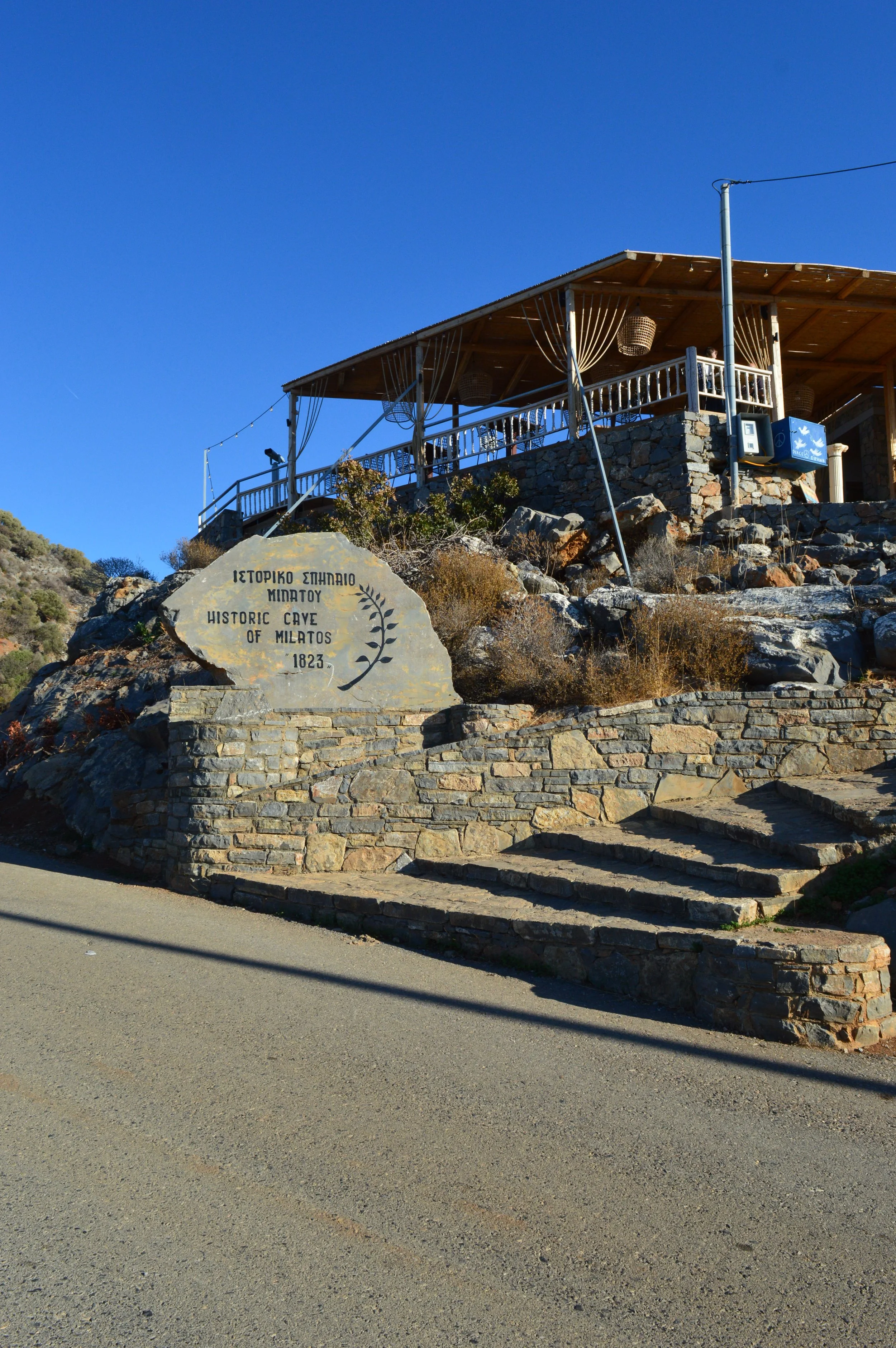
From Milatos village, follow the road signs for the cave, about 2.5 km east, and park near the start of the path. From there it's a short uphill walk of roughly 10–15 minutes on a rocky path. Visitors also mention a taverna near the start of the walk, which makes a pleasant stop before or after.
Tips for visiting
Bring a torch: There are no lights inside, so use a torch or your phone.
Wear closed shoes: The path is rocky and the cave floor is natural and uneven. In places you'll need to bend or scramble.
Go in daylight: It's safer, and the views are best.
Entry is free: There is no ticket office or guide.
Parking: Space is limited on the narrow road, so park carefully and leave room for other vehicles.
Be respectful: This is a memorial site. Keep voices low, and take care around the chapel and ossuary.
Make it part of your day
The cave pairs well with a swim at one of the nearby beaches or lunch at a harbour taverna in Milatos. You can also combine it with a day in Agios Nikolaos or a boat trip to Spinalonga, another place where the island's history comes alive.